
The EVO ICL pre-procedure evaluation is where your path toward clear vision begins, and understanding what happens at each stage can make the entire process feel far less daunting. EVO ICL (Implantable Collamer Lens) is an FDA-approved, additive lens placed behind the iris without removing corneal tissue, designed for adults with moderate-to-severe myopia who may not qualify for LASIK. Many patients notice improved vision within 24 to 48 hours, with full healing typically occurring over one to three months. At 20/20 Institute, our team guides Colorado patients through every phase of this experience, from your first phone call to your final follow-up. Schedule your free phone consultation to find out if you may be a candidate.
What Is EVO ICL and Who Is It For?

EVO ICL is an implantable Collamer lens that’s FDA-approved for adults ages 21 to 45 with moderate-to-severe myopia, with or without astigmatism. Unlike LASIK, which reshapes the cornea, EVO ICL is placed between your iris and natural lens, without removing corneal tissue. The lens is also reversible, meaning it can be removed or replaced if your needs change over time.
Patients with thin corneas, high prescriptions, or chronic dry eye are often told they’re not LASIK candidates. For many of them, EVO ICL isn’t a compromise; it may be a better option for their anatomy. The procedure is designed with situations like these in mind.
We also want to be direct about something that matters to us: if EVO ICL isn’t the right fit for you, we’ll tell you, and we’ll explain why. Our team makes recommendations in our patients’ best interests, even when that means suggesting a procedure we don’t offer. You can explore LASIK alternatives or learn more about EVO ICL to see how it compares to other options before your consultation.
How Your EVO ICL Process Begins at 20/20 Institute
Your first step is a free phone consultation, which usually takes 20 to 30 minutes. We cover whether EVO ICL may be a good fit, answer your questions, and talk through pricing. If it makes sense to continue, that call leads to a complimentary doctor evaluation.
Doctor evaluations take place at our Denver Tech Center, Westminster, and Colorado Springs offices. Colorado Springs patients have their evaluation and follow-up visits in Colorado Springs, and the EVO ICL procedure itself takes place in Denver. Your patient counselor will help you plan each step.
The EVO ICL Pre-Procedure Evaluation at 20/20 Institute
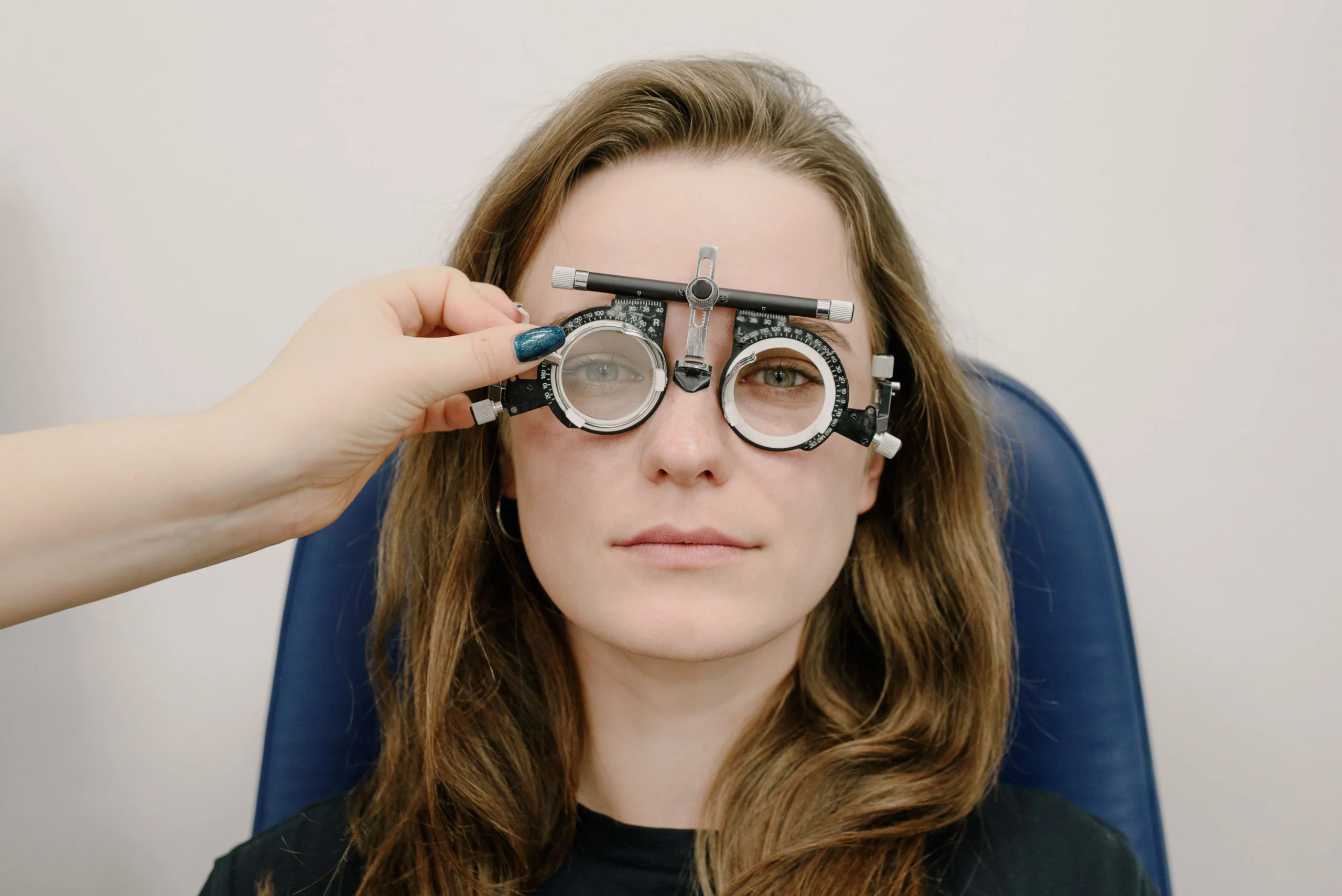
The EVO ICL pre-procedure evaluation isn’t a routine eye exam. It’s a detailed diagnostic workup designed to confirm whether you’re a strong candidate and to size your lens with precision. At 20/20 Institute, we use advanced diagnostic technology, because getting these measurements right may help support safer, more predictable outcomes.
The pre-op workup covers six key areas.
First, we assess your visual acuity and current prescription to establish a baseline. Second, we measure corneal thickness and curvature to evaluate your eye’s structural health. Third, we measure anterior chamber depth, the space between your cornea and natural lens, which helps determine the correct ICL size for your eye. Fourth, we evaluate pupil size under different lighting conditions. Fifth, we conduct an endothelial cell count to check that your cornea has sufficient cell density to remain healthy after the lens is placed. Sixth, we review your overall eye health for any conditions that could affect surgical outcomes.
Your clinical team will also discuss your medical history, current medications, any prior eye surgeries, and your vision goals. For Colorado patients, that conversation often includes activities like skiing, hiking, or cycling, because your lifestyle matters when we’re counseling you on expectations and recovery.
How to Prepare for Your EVO ICL Doctor Evaluation
Preparing well for your evaluation and the pre-op measurements helps make your results more accurate. Your dedicated patient counselor will walk you through every step, but here are the core preparation points.
Stop wearing contact lenses usually 1 to 2 weeks before your measurements. Your patient counselor will confirm the exact timing for your lens type. Contact lenses change the shape of your cornea and can skew the diagnostic readings. Bring a complete list of your current medications and supplements, since some can affect healing or eye pressure. Plan to have a driver with you, because we may use dilating drops during the evaluation, which temporarily blur close vision.
It also helps to come with questions written down. Patients commonly ask: How long will my ICL last? Will I still need reading glasses as I get older? What happens if my prescription changes after surgery? Your clinical team will answer these during your consultation, and there’s no pressure to commit to anything that day.

What Happens on EVO ICL Surgery Day
EVO ICL surgery is an outpatient procedure, meaning you arrive, have the surgery, and go home the same day. The EVO ICL procedure for both eyes typically takes about 20 minutes, and you can plan on about 90 minutes at the office. The environment is designed to feel calm from the moment you walk in.
Your EVO ICL procedure is performed by one of our surgeons. Dr. Jim E. Montgomery, M.D., our Medical Director, is a board-certified ophthalmologist who has been with 20/20 Institute since 2005. Dr. Amy T. Kelmenson, M.D., is a board-certified ophthalmologist who specializes in cornea and refractive surgery.
Here is what your surgery day may look like, step by step. You arrive at the office, complete final consent paperwork, and have any remaining questions answered. Numbing and dilating drops are applied. Your surgeon makes a small, self-sealing micro-incision at the edge of the cornea. The folded ICL is inserted through the incision and positioned behind the iris, in front of your natural lens. The lens unfurls and your surgeon confirms proper placement and vaulting, the spacing between the ICL and your natural lens. Protective eyewear is placed over your eyes before you leave, and your driver takes you home for rest.
What You May See and Feel Immediately After Surgery
Many patients are surprised by how quickly their vision begins to clear. Some notice meaningful improvement within a few hours of the procedure. Vision may appear slightly hazy or soft at first, and mild light sensitivity is common because your pupils may remain dilated for a period after surgery.
You may feel a mild foreign-body sensation or minor scratchiness in the first hours. Sharp, significant pain isn’t expected; if you experience that, contact us immediately. You have 24/7 access to our clinical team for exactly this reason [verify: confirm the actual after-hours access protocol with the client], so you’re never left wondering whether something is normal.
Mild halos or starbursts around lights can appear in the early days and typically fade over the following weeks. Your dedicated patient counselor remains reachable throughout this period, and we’d rather hear from you than have you spend a night anxious and unsure.

EVO ICL Post Op Care: Your Recovery Timeline
EVO ICL post op care follows a predictable path for many patients, and knowing what to expect at each stage can remove a lot of the uncertainty. Here’s how EVO ICL surgery recovery typically unfolds.
On Day 1
On Day 1, rest is the priority. Vision may be mildly hazy, light sensitivity is common, and you should have a driver for any travel. Begin your prescribed eye drops as instructed and wear your protective eye shield while sleeping.
Weeks 2 to 4
Through Weeks 2 to 4, vision stabilizes further, and many patients are comfortably back to their normal daily routines by this point. Continue prescribed drops as directed and attend any scheduled follow-up appointments.
Days 2 to 7
During Days 2 to 7, many patients return to desk work within one to three days if vision meets their needs. Haziness continues to clear, halos and light sensitivity fade gradually, and you should attend your scheduled follow-up visit. Avoid rubbing your eyes and avoid getting water in your eyes.
Months 1 to 3
During Months 1 to 3, full healing and visual stabilization typically complete over this window. Residual halos or glare, if present, usually resolve by the end of this period. Colorado Springs patients attend these follow-up visits at our Colorado Springs office. Our patient reviews, including more than 672 five-star Google reviews, reflect how supported patients feel through this process.
Activity Restrictions During EVO ICL Recovery
EVO ICL recovery time is generally short, but some activity restrictions apply while your eye heals.
- No eye makeup for 48 to 72 hours.
- No eye rubbing for 2 to 4 weeks, as even accidental rubbing can affect lens position.
- Avoid getting water in your eyes for 2 weeks, so no swimming or hot tubs. Showering is okay.
- Contact sports and skiing: hold off until your clinical team clears you, which is usually about 2 weeks.
Many patients can drive within one to two days if their vision meets legal standards, but confirm this with your doctor at your first follow-up. Screen use is generally fine after the first day, though it’s worth following your doctor’s specific guidance. For desk work and light activity, many patients return within one to three days.
Colorado’s high-altitude UV exposure makes quality UV-blocking sunglasses especially important during outdoor recovery. Your cornea and the ICL itself benefit from consistent UV protection, and in a state known for abundant sunshine, this isn’t a minor consideration.
EVO ICL Recovery vs. LASIK Recovery: Key Differences

Patients often ask how EVO ICL surgery recovery compares to LASIK. The most significant difference is structural: LASIK creates a corneal flap that requires its own healing process, while EVO ICL leaves the cornea untouched. That means there’s no flap healing, and EVO ICL may offer better quality of vision for patients with thin corneas or high prescriptions.
Both procedures share a similar overall recovery window of one to three months for full stabilization. The reversibility of EVO ICL is another meaningful distinction; if your prescription changes significantly or your vision needs evolve, the lens can be removed, while LASIK’s corneal changes can’t be undone.
For a detailed comparison, see how ICL compares to LASIK or review our local guide on ICL vs. LASIK in Denver to understand which procedure may fit your anatomy and lifestyle.
EVO ICL Cost and What to Expect at 20/20 Institute
EVO ICL is a premium procedure, and we believe you deserve honest, upfront cost information before you commit to anything. We cover pricing on your first phone consultation, so you have a clear answer before you decide anything. 0% interest financing for 24 months is available with approved credit.
Your free phone consultation carries no financial commitment. On that call, we talk through candidacy, answer your questions, and cover pricing, so you have real answers before deciding whether to move forward. If you do, your complimentary doctor evaluation confirms your candidacy in detail, and your dedicated patient counselor walks through your quote and financing directly, without pressure.
Transparent pricing is something we take seriously. We openly publish our outcome data because we believe patients deserve honest information, and that same standard applies to how we communicate cost.
Why Colorado Patients Choose 20/20 Institute for EVO ICL
We focus exclusively on refractive surgery. That focus matters when you’re choosing a provider for an elective surgical procedure that requires precision at every stage, from candidacy evaluation through the final follow-up.
Our surgical team includes Dr. Jim E. Montgomery, M.D., our Medical Director, and Dr. Amy T. Kelmenson, M.D., a board-certified ophthalmologist specializing in cornea and refractive surgery. Together with our optometrists and patient counselors, they bring depth of experience to every recommendation we make.
Our concierge model extends to every EVO ICL patient: a dedicated counselor guides you from your first inquiry through your last follow-up, and you have 24/7 access to our clinical team. Explore EVO ICL at 20/20 Institute or learn more about EVO ICL in Denver to see how our approach compares.
Schedule your free phone consultation or call us at 303-202-0669 to speak with a member of our team.
Take the First Step: Schedule Your Free Phone Consultation in Colorado
Your EVO ICL process starts with an honest conversation about your eyes, your prescription, and your goals. From the pre-procedure evaluation through surgery day and the full recovery timeline, our team is with you at every step, as a concierge-focused practice where your experience matters.
The free phone consultation is your opportunity to get real answers with no pressure and no commitment. It usually takes 20 to 30 minutes, and it helps you understand what the evaluation involves and whether EVO ICL may be right for you.
Call 303-202-0669 or schedule your free phone consultation online now. If it’s a good fit, your complimentary doctor evaluation follows at our Denver Tech Center, Westminster, or Colorado Springs office. You can also explore more EVO ICL resources if you’d like to keep researching before you reach out.
Frequently Asked Questions About EVO ICL in Colorado
Can the EVO ICL lens be removed after surgery?
Yes. EVO ICL is designed as a long-term solution, but the lens can be removed or replaced if your prescription changes significantly or if your clinical needs evolve. This reversibility is one of the reasons it may be well-suited for younger patients whose eyes may still change over time.
How long does EVO ICL last?
EVO ICL is designed as a long-term correction. Unlike contact lenses or glasses, there’s no replacement cycle. Age-related changes like presbyopia (needing reading glasses) can still develop later in life, and your eye doctor can talk with you about what to expect.
When can I exercise after EVO ICL surgery?
Light activity and desk work are typically fine within one to three days. Strenuous exercise, contact sports, and activities like skiing require more time, and clearance is usually about 2 weeks. Your clinical team will give you a specific timeline at your follow-up appointments.
Is EVO ICL covered by insurance?
EVO ICL is generally classified as an elective procedure, similar to LASIK, and isn’t typically covered by standard vision or health insurance. Financing options and HSA/FSA funds can be used to manage the cost. Your patient counselor will walk through all available options with you.
How is EVO ICL different from cataract surgery?
Cataract surgery replaces your natural lens when it becomes cloudy. EVO ICL is placed in addition to your natural lens, leaving it in place. The two procedures address different conditions.
Medical disclaimer. This content is educational and isn’t medical advice. It doesn’t replace consultation with a qualified eye care professional.