Recovery from PRK can feel unpredictable, and if you’ve heard that it takes longer than LASIK, that’s accurate. The PRK recovery timeline typically spans three to six months for full visual stabilization, though most patients experience functional vision within one to two weeks. This post gives you a week-by-week breakdown of what recovery from PRK actually looks like so you can plan ahead and understand what’s normal along the way.
The Short Answer: How Long Does PRK Recovery Take?
Most patients can return to desk work within one to two weeks, depending on their job and individual healing rate. Vision can fluctuate for four to six weeks before settling, and full visual stabilization from PRK typically takes three to six months. Individual healing profiles vary, but the general pattern is well understood.
Why PRK Recovery Takes Longer Than LASIK
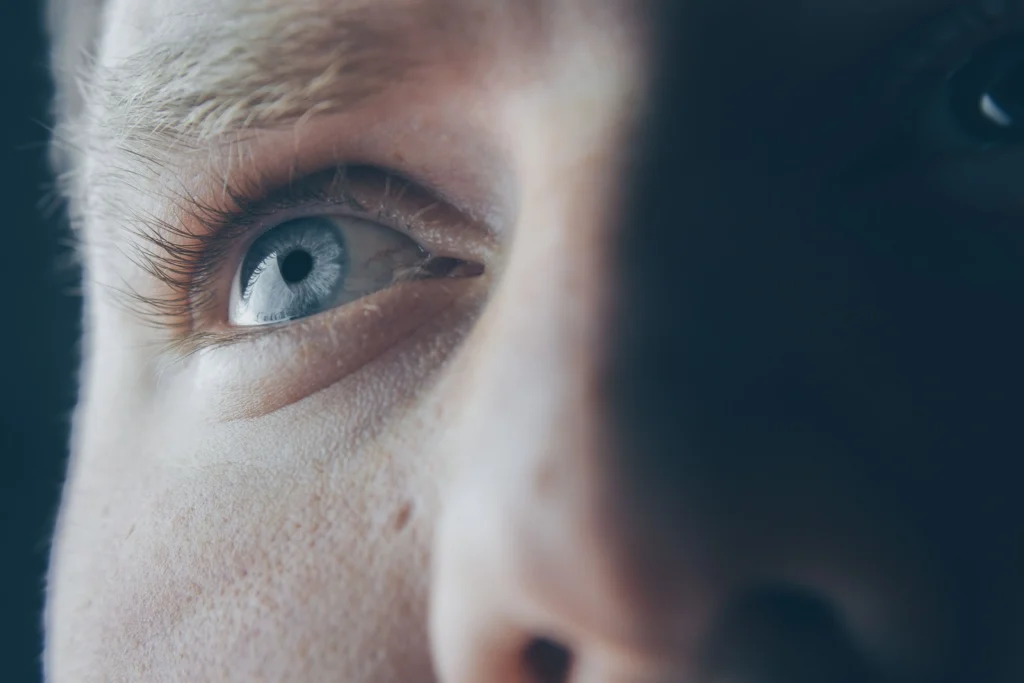
The core clinical reason is straightforward once you know the anatomy involved. With LASIK, a thin corneal flap is created, the laser reshapes the tissue beneath it, and the flap is repositioned, which means the surface of the eye is largely intact from the start. PRK works differently: the outer epithelial layer of the cornea is removed before the laser treats the underlying tissue, without removing corneal tissue in the same way LASIK does. That epithelial layer then has to regenerate after surgery, and that regeneration period is what drives the longer early recovery.
Once your cornea finishes healing, final visual outcomes from PRK are comparable to LASIK for the right candidates. The process takes more time, but it could arrive at the same destination. If you’re weighing your options, our post on the difference between LASIK and PRK explains how candidacy factors into that decision.
The contact-free period can also help reduce the risk of corneal swelling and supports a healthier ocular surface at the time of surgery. Contact wearers are also more likely to experience dryness, and you can read more about how we address that on our page about dry eye and LASIK. At 20/20 Institute, we’re entirely committed to the health and safety of each patient we see. In preparation for your LASIK procedure, we’ll provide you with detailed instructions and around-the-clock support to help make sure your eyes are ready on the day of your surgery.
The PRK Recovery Timeline: A Week-by-Week Breakdown
The PRK eye surgery recovery timeline follows a consistent general pattern, even though individual healing profiles can vary based on prescription strength, corneal healing rate, age, and dry-eye status. Here’s what you can typically expect at each stage.
Day 1 to Day 3: The Most Uncomfortable Phase
These first three days are typically the hardest part of PRK recovery, and our team wants to be honest with you about that rather than downplay it.
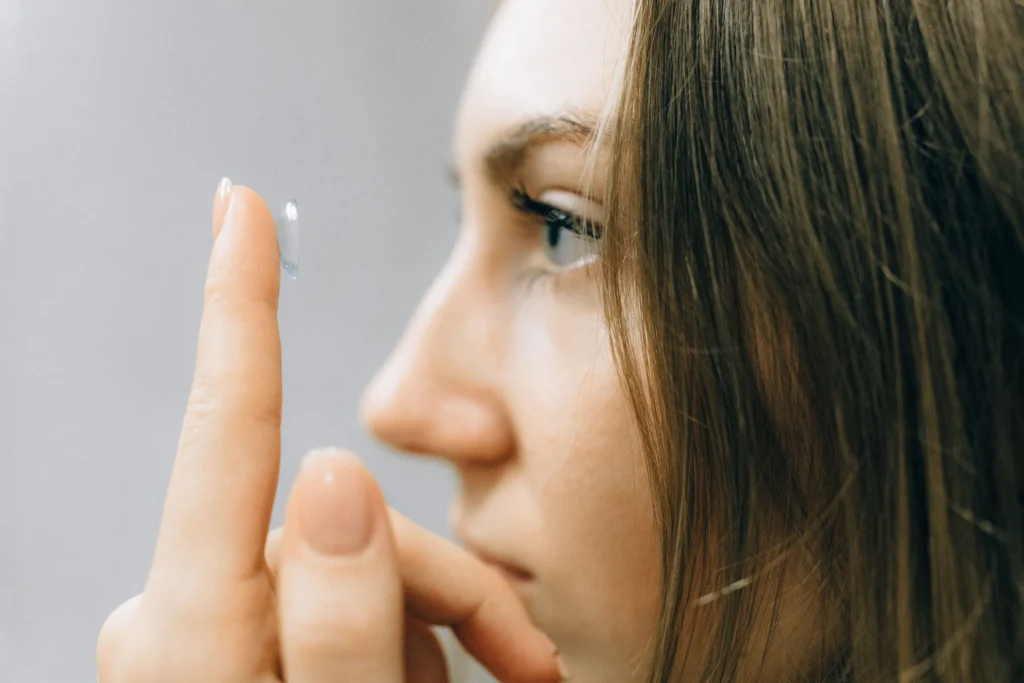
At the time of surgery, a bandage contact lens is placed on the eye to protect the healing epithelium and reduce discomfort while the surface regenerates. Common sensations during the first few days may include significant light sensitivity, excessive tearing, a gritty or burning feeling, and blurred vision. Your vision during this phase isn’t a preview of your final result; the cornea is actively healing and the protective lens, surface irregularity, and inflammation all temporarily reduce visual quality.
Prescribed drops and oral comfort medications as directed by your surgeon may help manage discomfort during this phase. Resting with your eyes closed as much as possible, keeping lights dim, and limiting screen exposure are all approaches our team may suggest. Most patients notice meaningful improvement in discomfort by day three to four, though sensitivity varies from person to person.
Days 4 to 7: Epithelial Healing and the Bandage Lens Removal
The epithelial layer typically closes within four to five days after PRK. When the surface has healed enough, the bandage contact lens is removed by your surgeon at a follow-up visit, usually around days five to seven. You shouldn’t attempt to remove it at home.
After the bandage lens comes off, vision may still be blurry or hazy, though most patients find that comfort is good. Light sensitivity often continues but typically decreases during this week. You may be able to manage simple, low-demand tasks, but reading and screen use may cause significant fatigue at this stage. Blurry vision after lens removal doesn’t mean anything has gone wrong; your eyes are still early in the healing process.

Week 2: Vision Begins to Improve, Return to Work Timing
Week two is when many patients start asking about returning to normal workloads, and it’s a reasonable question. Many patients can return to desk work within one to two weeks, depending on their job type, individual healing rate, and surgeon approval. That timing isn’t guaranteed, and your surgeon will advise you based on your specific healing progress at your follow-up visits.
Patients whose work involves sustained screen use, fine detail, or significant driving may need to wait until vision is functional enough for those tasks. Those doing physical labor, working outdoors in bright light, or working in dusty environments may need additional recovery time. At week two, vision is often still hazy and may fluctuate day to day, which is a normal part of the healing process. After PRK it is important to protect your eyes from UV light exposure. Quality sunglasses for all outdoor activities is important.
Weeks 3 to 4: Fluctuating Vision Is Normal
Weeks three and four are often a confusing stretch of PRK eye surgery recovery. You may have a day where your vision feels noticeably sharper, followed by a day where it seems hazy again. This pattern is expected and doesn’t mean something has gone wrong.
During this period, your cornea is still remodeling and your visual system is adjusting to the changes. Halos around lights, glare, and difficulty with contrast in low-light conditions may continue. Driving at night may not be advisable yet, depending on your individual progress and your surgeon’s assessment. Fluctuation at this stage is part of the normal healing arc, not a sign of a problem.
Month 2 to Month 3: Continued Stabilization
By months two and three, most patients find that the harder part of recovery is behind them. Vision typically continues to sharpen during this window, and halos and glare often reduce significantly compared to the early weeks.
With surgeon approval, contact sports and activities that carry a risk of eye impact may typically be resumed during this period, often after one to three months post-surgery. Visual stability is improving, though it may not be fully final for all patients. Follow-up visits during this phase help our care team monitor your healing and adjust your drop regimen if needed.
Month 3 to Month 6: Final Visual Outcome
Full visual stabilization from PRK eye surgery typically occurs between three and six months after surgery. Some patients with higher prescriptions or slower corneal healing profiles may take closer to a year. This is the stage where your final outcome may be meaningfully evaluated.
At 20/20 Institute, we publish our results so you can review them before committing to anything. In an analysis of LASIK patients treated at our Denver location in 2022 who completed one year of follow-up care, 99.67% achieved 20/20 vision or better, as measured on a Snellen Visual Acuity Chart. That cohort covered 793 patients and 1,542 eyes. Individual healing profiles vary. You can review our published surgical outcomes (2022 Summary of Outcome Results PDF) in full on our results page.
Ready to find out if you’re a candidate? Schedule your free phone consultation or call us at 303-202-0669.
When LASIK May Not Be the Right Fit
Discomfort and the desire to move through recovery as smoothly as possible are among the most common concerns our team hears from patients researching PRK. There isn’t a shortcut through the biological healing process, but there are real steps that may make the early weeks more manageable.
Dry eye is also common during PRK recovery and may affect both comfort and visual clarity. Managing dry eye during recovery is something our team addresses with you throughout the process. If discomfort seems unusual or worsens after day three rather than improving, our team would suggest contacting your care team rather than waiting it out.
Your surgeon will prescribe a specific eye drop protocol for you, typically including prescription anti-inflammatory drops, antibiotic drops, and comfort-care drops. Oral comfort medication may also be recommended. Keeping lights dim during the first few days, using a dark sleep mask at night, limiting screen time during peak discomfort, and wearing sunglasses outdoors once the bandage lens has been removed may all help.

How 20/20 Institute Supports Your Recovery from PRK
Recovery from PRK at 20/20 Institute isn’t a figure-it-out-at-home experience. Our entire practice is built around refractive surgery procedures like PRK, LASIK, and EVO ICL, with no general eye care appointments in the background. Our team’s exclusive focus means PRK post-operative care is part of the regular routine here, not an occasional occurrence.
Once you come in for your in-person doctor evaluation, a dedicated patient counselor is assigned to you and stays with you through the rest of the process. Before each appointment, a patient telephone counselor confirms your follow-up location and timing in advance so there’s no guesswork on your end. You won’t arrive somewhere unexpected or wonder whether you have the right address.
Follow-up visits may take place at our Westminster location or our Denver Tech Center location in Englewood. The procedure itself is performed at Denver Tech Center in Englewood. These logistics are confirmed for you in advance. Learn more about our patient-centered approach to recovery care.
PRK Recovery and Our Clinical Team
PRK recovery at 20/20 Institute is managed by clinicians with deep, specific experience in refractive surgery, not generalists seeing occasional post-operative patients.
Our Board Certified cornea and refractive surgery specialist, Dr. Amy T. Kelmenson, M.D., is a fellow of the American Board of Ophthalmology and a specialist in cornea, refractive surgery, and external disease. She has performed thousands of ophthalmic surgeries including PRK and has practiced in the Denver area since 2012. Our Medical Director, Dr. Jim E. Montgomery, M.D., has performed 40,000 or more eye surgeries and has been with 20/20 Institute since 2005. When our care team is monitoring a healing cornea at week three or guiding you through dry eye management at month two, that depth of refractive surgery experience informs every recommendation.
PRK Recovery vs. LASIK Recovery: The Key Difference
The difference in recovery timelines between these two procedures comes down to one anatomical distinction. With LASIK, a corneal flap is created and repositioned after laser treatment, which allows the eye surface to heal relatively quickly. Because of that, the first week after LASIK is typically more comfortable and visual recovery tends to be faster. With PRK, the epithelial surface must regenerate, which is why the early weeks may be more uncomfortable and vision may take longer to stabilize.
For most patients, final visual outcomes from both procedures are comparable when candidacy is appropriate. If you’ve been told you’re not a LASIK candidate, PRK may be a better option for your anatomy, and reaching similar endpoints is a genuinely meaningful result, not a fallback.
Ready to Learn If PRK Is Right for You?
Understanding the PRK recovery timeline is a good first step. The next step is finding out whether PRK may be the right procedure for your eyes and your lifestyle, and that’s a conversation we can start on a phone call.
If you’d like to know whether PRK may be right for your eyes, start with a free phone consultation or call us at 303-202-0669. In 20 to 30 minutes, a patient counselor can talk through your candidacy, answer your questions and go over pricing. If it looks like a fit, the next step is a complimentary doctor evaluation at our Denver Tech Center, Westminster or Colorado Springs office. There’s no cost and no pressure, and if you may not be a good candidate, we’ll tell you.
If you’d like to review the procedure details before booking, you can read about PRK eye surgery at 20/20 Institute first.
PRK Recovery Timeline: Key Takeaways
- Days 1 to 3 are typically the most uncomfortable. Discomfort can usually be managed with prescribed drops and oral medications as directed by your surgeon.
- Bandage contact lens: our doctors remove it at a follow-up visit, typically around days 5 to 7. Don’t remove it at home.
- Eye makeup: avoid for 48 to 72 hours after surgery.
- Eye rubbing: avoid for 2 to 4 weeks.
- Water: keep it out of your eyes for 2 weeks, so no swimming or hot tubs. Showering is okay.
- Desk work: many patients return within 1 to 2 weeks, depending on job type, individual healing, and surgeon approval.
- Fluctuating vision for 4 to 6 weeks is a normal part of healing.
- Final results are typically apparent at 3 to 6 months. Individual healing varies.
- Dry eye and light sensitivity are common throughout recovery, and your care team can help manage them.
- Support: a dedicated patient counselor is assigned after your doctor evaluation, and a patient telephone counselor confirms every follow-up location and time in advance.
Your next step is a phone call, not a commitment. Schedule your free phone consultation to find out whether PRK may be right for your eyes.
Medical Disclaimer
This content is educational and isn’t medical advice. It doesn’t replace consultation with a qualified eye care professional. Medical outcomes can’t be guaranteed. Results vary, risks exist with PRK, and complications can occur with any medical procedure.